5 Ways to Reduce Training Production Costs by 80%
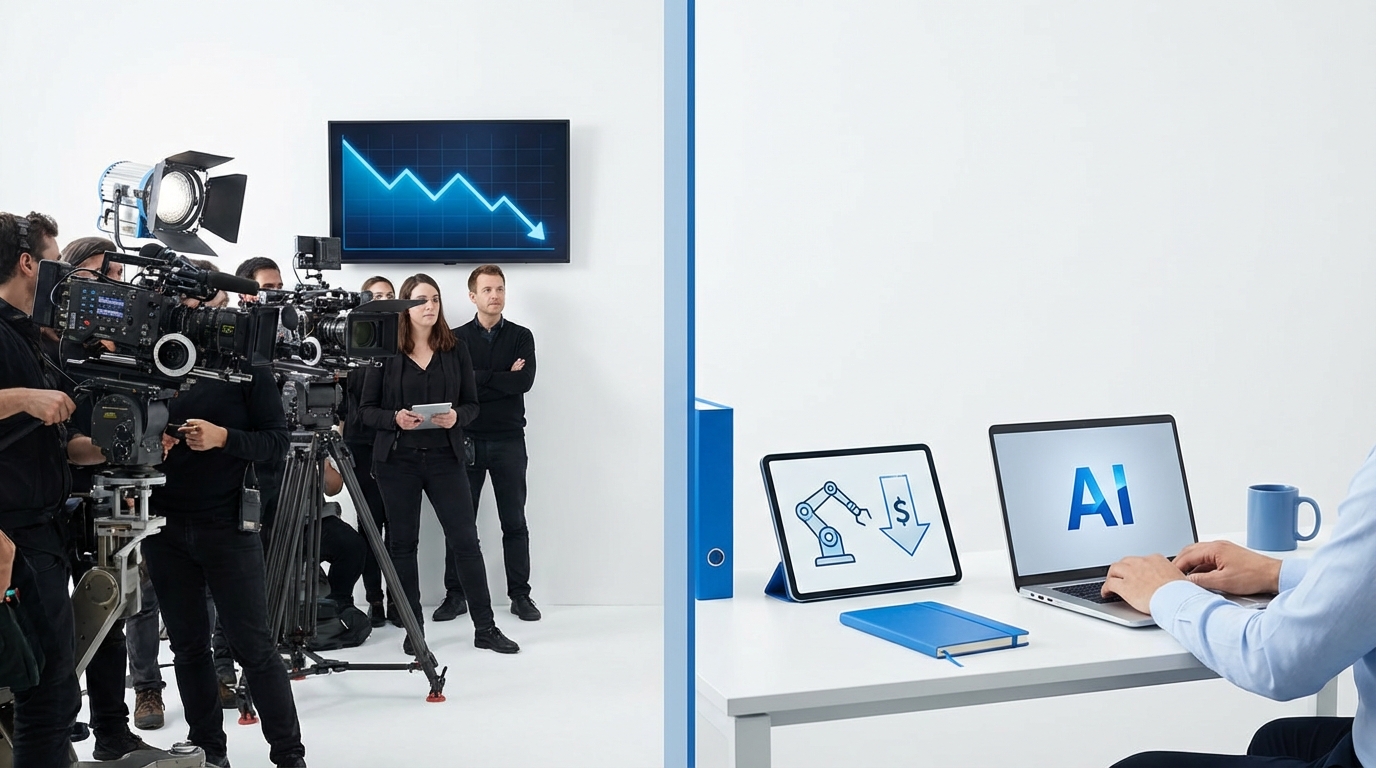
Training production budgets have not grown. Training demands have. L&D teams are expected to cover more topics, more languages, more roles, and more frequent updates, all without proportional budget increases. Something in the model has to change.
1. Replace studio production with AI-generated video
A single studio-produced training video costs $5,000-$20,000 depending on complexity. AI-generated video with professional avatars costs a fraction of that. The quality gap that existed three years ago has closed. Modern AI avatars are filmed from real footage with natural lip sync and expressions. For most training use cases, learners cannot tell the difference.
The savings compound: no studio rental, no camera crew, no presenter scheduling, no post-production editing. Each of those line items disappears from your budget.
2. Localize once, deploy everywhere
Manual localization is the hidden budget killer. Translating and re-recording a module into one additional language typically costs 40-60% of the original production cost. Multiply by 10 languages and you have spent more on localization than on the original content.
AI localization produces all language versions from a single source at a fraction of the per-language cost. More importantly, when the source content updates, all localized versions update automatically. No re-translation, no re-recording.
3. Build from templates, not from scratch
Most training modules follow a small number of structural patterns: introduction, key concepts, examples, summary, assessment. Building each module from scratch wastes time on decisions that have already been made. Template-based creation locks in your brand, your structure, and your quality standards, then lets creators focus on the content itself.
The best templates are not rigid. They provide a starting structure that the AI agent can adapt based on the topic, audience, and learning objectives you describe.
4. Update instead of re-create
Traditional production treats every update as a new project. Changed a process? Re-film the module. Updated a regulation? Start from scratch. That model made sense when production was the only option. It does not make sense when you can edit a script and re-render in minutes.
Platforms that support non-destructive editing let you change specific sections of a training module without touching the rest. Update the compliance section without re-rendering the introduction. Fix a product name without re-producing the entire demo walkthrough.
5. Eliminate the approval bottleneck
Hidden in every training production budget is the cost of delays. A module that takes two weeks to produce but six weeks to get through review and approval is an eight-week project. The direct cost is staff time. The indirect cost is outdated training reaching learners late.
When stakeholders can review AI-generated drafts in hours instead of weeks, the review cycle compresses. When changes from review take minutes to implement instead of days, the approval loop tightens. The total project timeline drops from months to days, and the cost drops with it.

TO SEE Team
Author
Frequently Asked Questions
Everything you need to know about TO SEE
- Simply describe your training topic, audience, and goals in plain language. The AI agent creates a structured training video with professional avatars, visual aids, and clear narration. You can iterate on the content through conversation, just like working with a real production team.
- We support over 40 languages including Arabic, Chinese, Danish, Dutch, English, French, German, Hindi, Italian, Japanese, Korean, Norwegian, Polish, Portuguese, Russian, Spanish, Swedish, and many more. Your training content maintains natural-sounding delivery across all languages.
- Yes. TO SEE supports SCORM 1.2 and 2004 export, so your training content can be deployed directly into any standards-compliant Learning Management System. You can also export as MP4 for quick sharing via email, Slack, or any other channel.
- Most training videos can be created in minutes, not days. Describe your topic to the AI agent, review the generated content, make any adjustments through conversation, and export. The entire workflow typically takes 10-15 minutes for a complete training module.
- Our professional avatars are created from real filmed footage, delivering human-quality presentation with natural lip sync, expressions, and movement. They look and feel authentic, building trust with learners and maintaining engagement throughout training content.
- Absolutely. We are fully GDPR compliant and run on European data centers. We support enterprise-grade security including SSO, role-based access control, and flexible hosting options. We support enterprise-grade security reviews for teams that need additional assurance.
- Yes. Record a short 1-minute video and provide 3 minutes of audio samples. Our AI creates a digital twin that can deliver any script in your voice and likeness across all supported languages. Consent verification ensures digital twins can only be created with explicit approval.
- Yes. We offer enterprise plans with custom API integration, SSO support, dedicated account management, priority support, and flexible deployment options including on-premises. Contact us to discuss your organization's specific needs.
Create your first training video today
No cameras. No production bottlenecks. Just talk to AI.