Why AI Training Videos Are Replacing Traditional Production
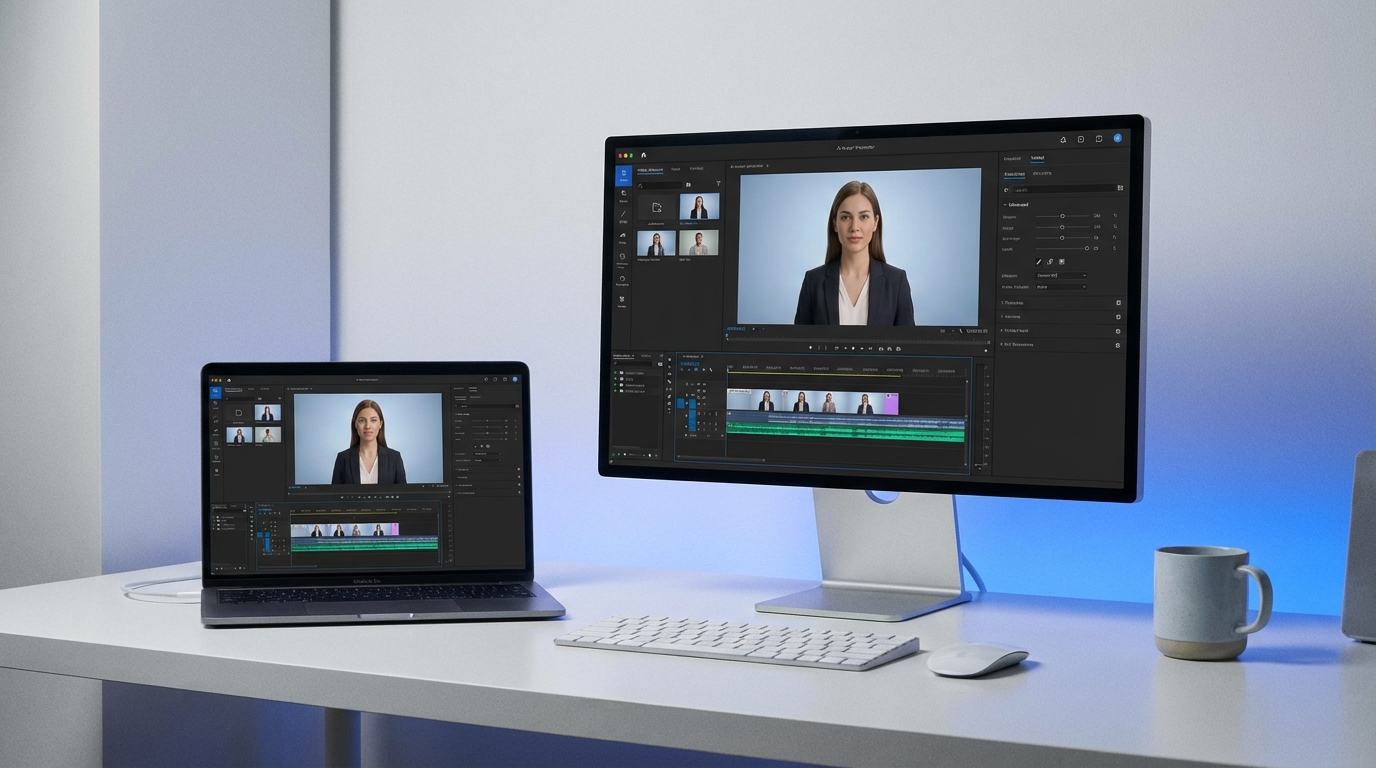
For decades, creating a training video meant the same thing: book a studio, hire a crew, get a presenter on camera, edit for weeks, and hope nothing needs updating. That model worked when training content changed once a year. It does not work anymore.
The economics stopped making sense
A single professionally produced training video costs between $5,000 and $20,000. Multiply that by the number of modules in a compliance library, then multiply again for every language your workforce operates in. For a multinational company with 30 modules in 10 languages, the math gets painful fast.
AI-generated training videos cut that cost by 80% or more. Not because the quality is lower, but because the production model is fundamentally different. There is no studio time, no editing suite, no re-shoots. You describe what you need, and the system produces it.
Speed is the real advantage
Cost savings matter, but speed is what changes the game. When a regulation updates, a product launches, or an internal process changes, L&D teams need to update training immediately. Traditional production cannot move that fast. AI-generated video can.
With platforms like TO SEE, you can update a training module and have it re-rendered in every language within the hour. That is not an incremental improvement. It is a different category of capability.
Quality has caught up
The early days of AI video were rough. Robotic voices, uncanny valley faces, obvious artifacts. That era is over. Professional AI avatars today are filmed from real footage, with natural lip sync, expressions, and movement. Learners respond to them the same way they respond to a real presenter.
Voice synthesis has made similar leaps. Modern text-to-speech in 40+ languages sounds natural enough that most viewers cannot tell the difference. Combined with structured slides and visual aids, the output is indistinguishable from traditional studio production.
What this means for L&D teams
The shift to AI-generated training video is not about replacing people. It is about removing the bottleneck between knowing what to teach and actually delivering it. L&D professionals spend too much time on production logistics and not enough on instructional design. AI flips that ratio.
The teams adopting this approach are not cutting corners. They are producing more content, updating it more frequently, reaching more languages, and doing it with smaller budgets. That is why the shift is happening now.

TO SEE Team
Author
Frequently Asked Questions
Everything you need to know about TO SEE
- Simply describe your training topic, audience, and goals in plain language. The AI agent creates a structured training video with professional avatars, visual aids, and clear narration. You can iterate on the content through conversation, just like working with a real production team.
- We support over 40 languages including Arabic, Chinese, Danish, Dutch, English, French, German, Hindi, Italian, Japanese, Korean, Norwegian, Polish, Portuguese, Russian, Spanish, Swedish, and many more. Your training content maintains natural-sounding delivery across all languages.
- Yes. TO SEE supports SCORM 1.2 and 2004 export, so your training content can be deployed directly into any standards-compliant Learning Management System. You can also export as MP4 for quick sharing via email, Slack, or any other channel.
- Most training videos can be created in minutes, not days. Describe your topic to the AI agent, review the generated content, make any adjustments through conversation, and export. The entire workflow typically takes 10-15 minutes for a complete training module.
- Our professional avatars are created from real filmed footage, delivering human-quality presentation with natural lip sync, expressions, and movement. They look and feel authentic, building trust with learners and maintaining engagement throughout training content.
- Absolutely. We are fully GDPR compliant and run on European data centers. We support enterprise-grade security including SSO, role-based access control, and flexible hosting options. We support enterprise-grade security reviews for teams that need additional assurance.
- Yes. Record a short 1-minute video and provide 3 minutes of audio samples. Our AI creates a digital twin that can deliver any script in your voice and likeness across all supported languages. Consent verification ensures digital twins can only be created with explicit approval.
- Yes. We offer enterprise plans with custom API integration, SSO support, dedicated account management, priority support, and flexible deployment options including on-premises. Contact us to discuss your organization's specific needs.
Create your first training video today
No cameras. No production bottlenecks. Just talk to AI.